
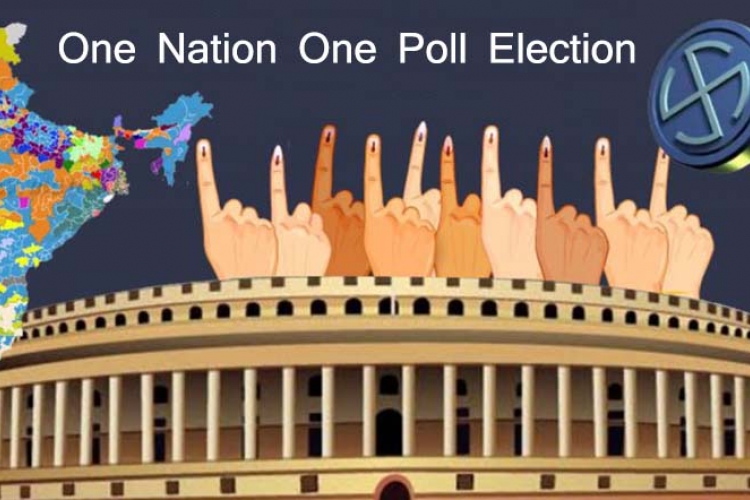
In a groundbreaking move, the Lok Sabha, India's lower house of Parliament, used electronic voting for the first time on December 17 to vote on the highly contentious 'One Nation One Election' bill. This marks a historic step towards modernizing the country's legislative processes and streamlining elections. The electronic voting system is expected to improve efficiency, transparency, and accountability in the democratic process, paving the way for more significant reforms in the future.
One Nation, One Election: A Comprehensive Analysis
Background
The concept of "One Nation, One Election" (ONOE) has been gaining traction in India for several years. The idea proposes synchronizing all national and state legislative elections across the country, thereby eliminating the need for multiple elections at different times. Proponents argue that ONOE would reduce election-related expenses, minimize disruption to governance, and strengthen democracy by encouraging higher voter turnout.
Groundbreaking Vote in the Lok Sabha
On December 17, 2022, the Lok Sabha became the first parliamentary body in India to use electronic voting to decide on the ONOE bill. The bill, if passed, would amend the Indian Constitution to allow for simultaneous elections. The electronic voting process was a significant step towards modernizing the country's electoral system.
Current Status of ONOE in India
Despite the historical vote in the Lok Sabha, the ONOE bill is still in its early stages. It now faces scrutiny in the Rajya Sabha, India's upper house of Parliament. The bill must be passed by both houses before it can be sent to the President for approval.
Top 5 FAQs
1. When will the Rajya Sabha vote on the ONOE bill? The exact timeline is unknown, but it is expected to be discussed during the upcoming budget session of Parliament.
2. What are the arguments in favor of ONOE? Proponents claim it reduces election costs, minimizes governance disruption, and increases voter turnout.
3. What are the arguments against ONOE? Critics argue that it could undermine the federal structure of India and limit political flexibility for states.
4. Is ONOE a new concept? No, the idea has been debated in India for several years. A parliamentary committee recommended ONOE in 2018.
5. What is the significance of the electronic voting system used in the Lok Sabha? It marks a historic step towards modernizing India's electoral processes and enhancing efficiency, transparency, and accountability.

Government officials in the UK are facing backlash from citizens as Storm Bram brings heavy rain and winds, leading to flood warnings and potential risks to life. Good Morning Britain presenters Richard Madeley and Susanna Reid raised concerns about the lack of warning to those living in affected areas, while viewers expressed frustration over inconsistent warning systems. With severe weather conditions expected to continue throughout the country, citizens are calling for better communication and preparation from their government.

A shocking conspiracy was uncovered by the Bihar Police when they arrested an individual from Bhojpur for allegedly issuing death threats to MP Pappu Yadav. The whole scheme was concocted by his close associates to garner enhanced security for Yadav. The arrested man, Ram Babu, has confessed to making a threatening video at the behest of the MP's associates, who had promised him a position in their party. Police are still investigating the instigator of this plot and are also looking into other aspects of the case.

Congress-led UDF emerged as the leading force in the Kerala local body elections, securing a majority in 505 out of 941 Grama Panchayats. Meanwhile, the BJP-led NDA made significant gains, winning the Thiruvananthapuram Corporation for the first time and retaining key municipalities. Union Home Minister Amit Shah credited the victories to PM Narendra Modi's leadership and vision for "Vikasita Keralam".

In a significant victory for the Aam Aadmi Party (AAP), three women candidates secured seats in the Kerala local body elections. Former Mayor and MCD AAP Councillor Dr. Shelly Oberoi congratulated the winners, praising their success as a strong example of women's empowerment. Meanwhile, Congress president Mallikarjun Kharge expressed his gratitude to the people of Kerala for giving a decisive verdict in favor of the United Democratic Front (UDF), while Prime Minister Narendra Modi acknowledged and praised the efforts of BJP workers in the state. This outcome reflects the increasing support for female leaders and potentially hints at a greater shift towards progressive politics in the state.

As the counting for the local body elections in Kerala began, the Congress-led UDF is in the lead in most of the city and town local bodies. This two-phase election, held on December 9 and 11, has seen a high voter turnout of over 70%. The results of this election will have a significant impact on the political landscape ahead of the 2026 Assembly elections in Kerala, with local body results often reflecting voter mood. Congress president Mallikarjun Kharge has expressed confidence in the UDF alliance's chances in the upcoming Assembly polls.

R Sreelekha, the former DGP and BJP's mayoral candidate in Thiruvananthapuram Corporation, secured a victory in the Sasthamangalam ward and pledges to deliver a corruption-free administration if given the chance to serve the public. Other notable victories in the corporation elections include former district president VV Rajesh and UDF mayoral candidate KS Sabarinathan. However, some high-profile defeats were seen, including actor Poojapura Radhakrishnan and Congress leader Johnson Joseph. Independent candidate Pattoor Radhakrishnan and Congress candidate Mary Pushpam also emerged victoriously in their respective wards.

According to sources, the Special Intensive Revision (SIR) exercise in West Bengal has identified a total of 58,80,202 voters who may be excluded from the draft voter list. This includes people who have passed away, transferred, missing, and identified as 'fake' by the Election Commission. These numbers are subject to change in the final list, which is set to be published on February 14, 2022. The commission has divided voters into three categories - own mapping, progeny mapping, and non-mapping - depending on their presence in the 2002 voter list. Those not falling into any of these categories will be called for a hearing by the EC.

In a significant shift in voter sentiment, the Congress-led United Democratic Front (UDF) is set for a decisive win in the Kerala local body elections, dealing a major setback to the ruling CPM-led Left Democratic Front (LDF) ahead of the 2026 Assembly elections. The UDF has consolidated its gains across urban local bodies, while the LDF's last-minute welfare push failed to curb anti-incumbency. The NDA also made significant gains, underlining its expanding presence in urban Kerala.

In a major upset, the BJP-led NDA has won the Thiruvananthapuram Municipal Corporation, ending the CPI(M)-led LDF's 45-year reign. The victory, with the NDA winning 50 out of 101 seats, is a boost for BJP's aspirations in Kerala's upcoming Assembly elections. The party's strong focus on development and Hindutva in Thiruvananthapuram, under the leadership of state unit president Rajeev Chandrasekhar, proved successful despite challenges faced during the campaigning. This victory has put the BJP in a strong position for the 2021 Assembly elections.

The Bharatiya Janata Party-led National Democratic Alliance (NDA) has taken a huge lead in Thiruvananthapuram Municipal Corporation, giving a setback to the ruling Left Democratic Front (LDF). Initial trends show the NDA leading in 25 wards, while the LDF is ahead in 15 wards and the UDF in 10 wards. This is a major blow to the LDF ahead of the upcoming assembly elections in Kerala, with a record voter turnout of 73.69%. The State Election Commission has also commended the peaceful conduct of the elections.