

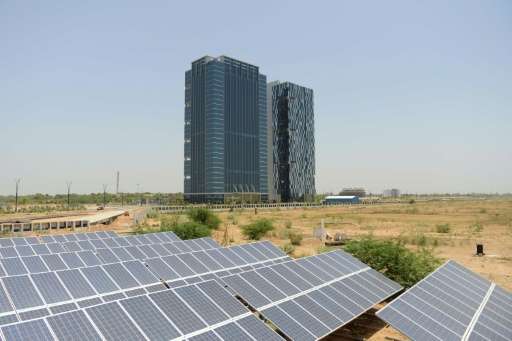
The Ministry of Electricity, Water, and Renewable Energy included a new project in its budget for 2024-2025, with financial approval granted by the Central Agency for Public Tenders. The project involves establishing a solar panel production workshop and a dedicated facility under the ministry's oversight. This move is in line with Kuwait's goal to generate 15 percent of its electricity from renewable sources by 2035 and aims to create a more sustainable and efficient energy production process.
Kuwait's Ambitious Solar Energy Push: Establishing a Solar Panel Production Workshop
Background
Kuwait, a major oil-producing nation, has embarked on a significant transition towards renewable energy sources in recent years. As part of its "Vision 2035" plan, the country aims to generate 15% of its electricity from renewables by 2035.
Solar energy has emerged as a key pillar of this transition, with Kuwait possessing vast solar potential due to its abundant sunshine. The establishment of a solar panel production workshop is a crucial step in realizing the country's solar ambitions.
Government Initiative
The Ministry of Electricity, Water, and Renewable Energy announced in 2023 the allocation of funds in its 2024-2025 budget for the establishment of a solar panel production workshop. The project has received financial approval from the Central Agency for Public Tenders.
The workshop will be dedicated to the production of solar panels under the ministry's oversight. This move aims to enhance Kuwait's self-sufficiency in solar energy production and drive down the cost of solar electricity.
FAQs
1. What is the significance of this solar panel production workshop?
The workshop will play a vital role in Kuwait's transition towards renewable energy sources. It will enable the country to manufacture its own solar panels, reducing dependence on imports and fostering domestic expertise.
2. How will this project contribute to Kuwait's renewable energy goals?
The workshop will contribute to Kuwait's target of generating 15% of its electricity from renewables by 2035. It will allow the country to expand its solar capacity and diversify its energy mix.
3. What is the timeline for this project?
The Ministry of Electricity, Water, and Renewable Energy has not yet announced a specific timeline for the establishment of the solar panel production workshop. However, the project is expected to be completed within the 2024-2025 budget cycle.
4. What is the potential impact on the solar energy industry in Kuwait?
The workshop is expected to stimulate the growth of the solar energy industry in Kuwait. It will attract investment, create jobs, and strengthen the local supply chain.
5. How does this initiative align with Kuwait's commitment to sustainability?
The establishment of the solar panel production workshop is in line with Kuwait's commitment to reducing greenhouse gas emissions and promoting sustainability. It will help the country shift towards cleaner energy sources and mitigate the effects of climate change.

In response to the rising demand for air travel, India's aviation regulator DGCA is introducing revised regulations for wet-leasing of aircraft by domestic airlines. The move aims to provide better oversight and facilitate smoother functioning for carriers managing leased fleets. With airlines facing delays in aircraft deliveries due to supply chain challenges, wet-leasing has become a popular option, but the current regulations have limitations. Through consultations with stakeholders, DGCA is making changes to address these limitations and support the growth of the aviation sector.

In 2025, Bonk, Inc. underwent a major transformation, clearing its debt and establishing new, high-margin revenue streams. As a result, the company is projecting 100% year-over-year revenue growth in 2026, with contributions from its digital asset platform, BONK.fun, and profitable beverage division, Yerbaé. Bonk, Inc. also sees potential for exponential growth due to favorable legislation and a clearer regulatory framework, which could unlock institutional demand and increase transaction velocity in the digital asset sector. These factors, along with the company's planned IPO, make for a bright future for Bonk, Inc.

Silver prices on the MCX have skyrocketed for the third consecutive session, with futures hitting a lifetime high of Rs 1,94,000 per kg. The US Federal Reserve's recent rate cut and strong global cues have contributed to renewed bullishness in the market. In 2025 alone, silver has seen a remarkable increase of 122.07 per cent, indicating a strong rally for the precious metal. As for gold, it has also seen an uptick, rising to Rs 1,30,641 per 10 grams on MCX. Analysts attribute silver's surge to high industrial demand and tightening global supply conditions.

Mutual Funds are a popular form of investment and the Nippon India Large Cap Fund has just crossed the Rs 50,000-crore assets under management (AUM) mark. Despite the recent market rally and festive season, equity mutual funds have seen lower inflows, but large-cap funds have still managed to perform well. With the stability and resilience of large-cap companies and consistent returns over the long term, experts say that large-cap mutual funds are a safe choice for investors looking to grow their wealth. This fund follows the philosophy of investing over indexing, utilizing Nippon's extensive research and diversifying investments across multiple companies and sectors.

India's Light Combat Aircraft (LCA) Tejas, a 4.5-generation fighter jet designed for the Indian Air Force, is making headlines in the business world with its advanced features and impressive performance. As the smallest and lightest aircraft in its class, the Tejas utilizes composite structures for enhanced manoeuvrability and efficiency. Protocols like an in-flight refuelling probe and an open-architecture mission computer make it a versatile weapon in modern warfare. With its cutting edge technology and proven reliability, Tejas is cementing its position as a game-changing fighter jet in the aerospace industry.

In a move to make borrowing cheaper for Americans, the Federal Reserve cut its influential interest rate by a quarter point, making it the third cut this year. However, this decision comes with the risk of stoking inflation, which has yet to fall to the Fed's preferred levels. Chairman Jerome Powell stated that the decision was made due to a gradually cooling labor market, but emphasized the Fed's obligation to prevent any one-time increase in prices from turning into an ongoing inflation issue.

The Federal Reserve announced its final rate decision of 2020, cutting its key lending rate by 25 basis points in line with market expectations. The US central bank also revealed its latest outlook, indicating one rate cut in each of the upcoming years. The decision was closely watched, as policymakers weigh the need for growth support against the risk of inflation. Despite initial caution, US stocks rose after the Fed's announcement. Fed Chair Jerome Powell stated that the economy is seeing moderate growth, but inflation remains at elevated levels.

Prime Minister Narendra Modi's campaign to help Indians reclaim their unclaimed funds has brought back approximately Rs 2000 crore to its rightful owners, with efforts to reach even remote areas through facilitation camps and web portals. The campaign, launched in October 2025, has revealed that approximately Rs 78,000 crore is lying untouched in bank accounts, Rs 14,000 crore with insurance companies, Rs 3,000 crore in mutual funds, and Rs 9,000 crore in unclaimed dividends. PM Modi appeals to the public to check the portals for any unclaimed funds, which could bring significant changes to countless lives in the country.

Amazon has announced plans to invest a whopping $35 billion in India by 2030 to drive AI-driven digitisation, boost exports, and create jobs. This investment is almost double that of Microsoft's and over two times that of Google's investment plans for the country. Amazon has already invested $40 billion in India, making it the largest foreign investor in the country. It also aims to expand its "Accelerate Exports" program and partner with the Apparel Export Promotion Council to reach more businesses and tap into international markets.

Telangana's two-day global summit, inspired by the World Economic Forum in Davos, aims to attract foreign investment and establish a long-term strategic roadmap for the state's economy. Day 1 featured high-profile meetings and discussions about transforming Telangana into a $3 trillion economy by 2047, aligning with India's national development goals. Day 2 will see CM Revanth Reddy engage with industry leaders across core sectors, with a focus on signing MoUs to boost investment and job creation in industries like textiles, electronics, and AI.