

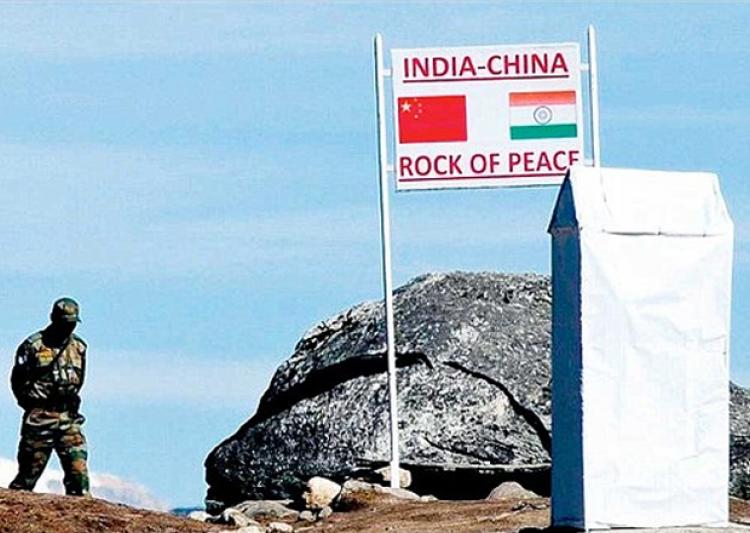
After weeks of negotiations, Indian Foreign Secretary announced that India and China have reached an agreement on patrolling activities in eastern Ladakh. This development comes just days before Prime Minister Modi's departure to the BRICS Summit, where it is anticipated that he will meet with Chinese President Xi Jinping for bilateral discussions. The agreement is believed to focus on patrolling in specific regions, and is a step towards easing tensions between the two countries.
India and China Reach Agreement on Patrolling Activities in Eastern Ladakh
Background:
Tensions between India and China have been high since 2020, when clashes along the Line of Actual Control (LAC) in eastern Ladakh resulted in casualties on both sides. Since then, negotiations have been ongoing to de-escalate the situation and resolve outstanding issues.
Recent Developments:
After weeks of negotiations, Indian Foreign Secretary Vikram Misri announced that India and China have reached an agreement on patrolling activities in eastern Ladakh. The agreement comes ahead of Prime Minister Narendra Modi's departure to the BRICS Summit, where he is expected to meet with Chinese President Xi Jinping for bilateral talks.
Details of the Agreement:
The agreement is believed to focus on patrolling in specific regions along the LAC. It is seen as a step towards easing tensions between the two countries and preventing further escalation of the border dispute. However, the exact details of the agreement have not been publicly released.
FAQs:
1. What is the significance of this agreement?
This agreement is a positive step towards de-escalating tensions between India and China and resolving the border dispute through diplomatic means. It creates a framework for peaceful patrolling and reduces the risk of further clashes.
2. What are the key provisions of the agreement?
The specific provisions of the agreement have not been made public, but it is believed to focus on patrolling in certain regions along the LAC and establishing mechanisms for communication and consultation between the two sides.
3. Will this agreement completely resolve the border dispute?
The agreement is not a comprehensive solution to the border dispute, but it is a step towards creating a more stable and peaceful situation along the LAC. The two countries still have to address the larger issue of the demarcation of the border.
4. How has the agreement been received by India and China?
Both India and China have welcomed the agreement as a positive development. It is seen as a sign of willingness to resolve differences and maintain peace and stability in the region.
5. What impact will the agreement have on bilateral relations between India and China?
The agreement could pave the way for improved bilateral relations between India and China. It creates a foundation for further dialogue and cooperation on a range of issues, including trade, security, and climate change.

A lone ISIS gunman ambushed a group of US service members and civilians in Syria, killing two and injuring three. The gunman was eventually killed by partner forces, confirmed by the US Defence Secretary. This is the first attack on US troops in Syria since the fall of President Bashar al-Assad. The casualties were transported to a nearby garrison and their identities will be withheld until their next of kin have been notified.

Pakistan's Prime Minister, Shehbaz Sharif, caused a major stir in Turkmenistan when he decided to gate-crash a meeting between Russian President Vladimir Putin and Turkish President Recep Tayyip Erdogan after waiting for 40 minutes. This impulsive move showcases Pakistan's increasing diplomatic insecurity and diminishing geopolitical clout. As Sharif struggles to secure meaningful engagements with major powers, he also faces domestic crises and is under the control of Army Chief Asim Munir. Meanwhile, the event in Turkmenistan marked a milestone for the country's declaration of neutrality and its efforts to maintain independence from both Western and Russian influence.

During an international forum in Turkmenistan, Pakistan's Prime Minister Shehbaz Sharif faced an embarrassing diplomatic moment as he walked into a private meeting between Russian President Vladimir Putin and Turkish President Recep Tayyip Erdogan. Sharif had been waiting for over 40 minutes for his scheduled meeting with Putin, causing him to enter the ongoing conversation between the two leaders. The incident, captured on video and shared by RT India, has triggered widespread mockery on social media with users making jokes about Sharif's actions. This comes as Pakistan attempts to strengthen its ties with Russia, while Putin maintains a closer relationship with India.

The latest bout of border fighting between Thailand and Cambodia has escalated, with hundreds of thousands of civilians displaced and casualties on both sides. The renewed skirmishes have shattered a ceasefire proposed by U.S. President Donald Trump in July. The leaders of both countries have promised to continue their aggressive stance, causing further tension and concerns for the safety of civilians. This has even resulted in the withdrawal of Cambodia's team from a regional sporting event.

Notorious Naxalite commander Ramdher Majji, along with his group, surrendered to the police in Chhattisgarh. This surrender marks a milestone in the fight against Naxalism, as the state's Deputy Chief Minister states that 80 percent of the menace has been eradicated. With the government's resolved aim to eliminate Naxalism by 2026, the country is heading towards a permanent solution to this long-standing issue. Home Minister Amit Shah also noted the significant progress made in reducing Naxal violence, with only 10 percent of the nation's population currently affected compared to 120 million people in the past.

After the tragic fire at their club in Goa, owners Gaurav and Saurabh Luthra have been detained in Thailand and are expected to be brought back to India soon. The Indian agencies have been in constant communication with Thai authorities and have managed to locate the brothers outside the main city area. With their detention, the process for their deportation has been initiated and Indian agencies are coordinating with Thai authorities for their return. The article also explains the general procedure for deportation of foreigners from Thailand under immigration laws.

Two years after the shocking death of Dawn Sturgess from Novichok poisoning, a public inquiry has released its final report. The report, overseen by retired Supreme Court justice Lord Hughes of Ombersley, examined whether British officials had taken adequate precautions to prevent the attack on ex-spy Sergei Skripal and his daughter Yulia in March 2018. The inquiry also investigated whether Ms. Sturgess's death could have been avoided with timely public warnings about abandoned objects. Good Morning Britain correspondent Richard Gaisford reported live from Salisbury, where the attack first came to light, to reveal the disturbing findings of the inquiry.

The Indian Air Force (IAF) has found a solution to maintain its aging Jaguar fleet by obtaining over 20 retired aircraft from the Oman Air Force. These jets will be dismantled and used as spares, as global production of Jaguar has ceased. With this transfer, India will become one of the few countries to still operate the Anglo-French supersonic attack aircraft. The collaboration between India and Oman in this regard reflects their robust defense partnership.

In a monumental decision, UNESCO has officially named India's beloved festival of lights, Deepavali, to its prestigious Intangible Cultural Heritage List during a committee meeting at the iconic Red Fort in Delhi. The news was met with joyous celebrations and performances, with Prime Minister Modi expressing his pride and noting the global impact of Deepavali's inclusion. This marks the sixteenth element from India to be inscribed on the Representative List, solidifying the country's rich cultural heritage.

India's festival of lights, Deepavali, has been added to Unesco's list of Intangible Cultural Heritage, following in the footsteps of Durga Puja. Prime Minister Narendra Modi expressed his delight at the nomination, stating that the festival is closely tied to India's culture and ethos. The nomination process for Deepavali involved diverse communities and experts, showcasing the festival's reach beyond the country, as it joins India's 15 elements already on Unesco's list.