

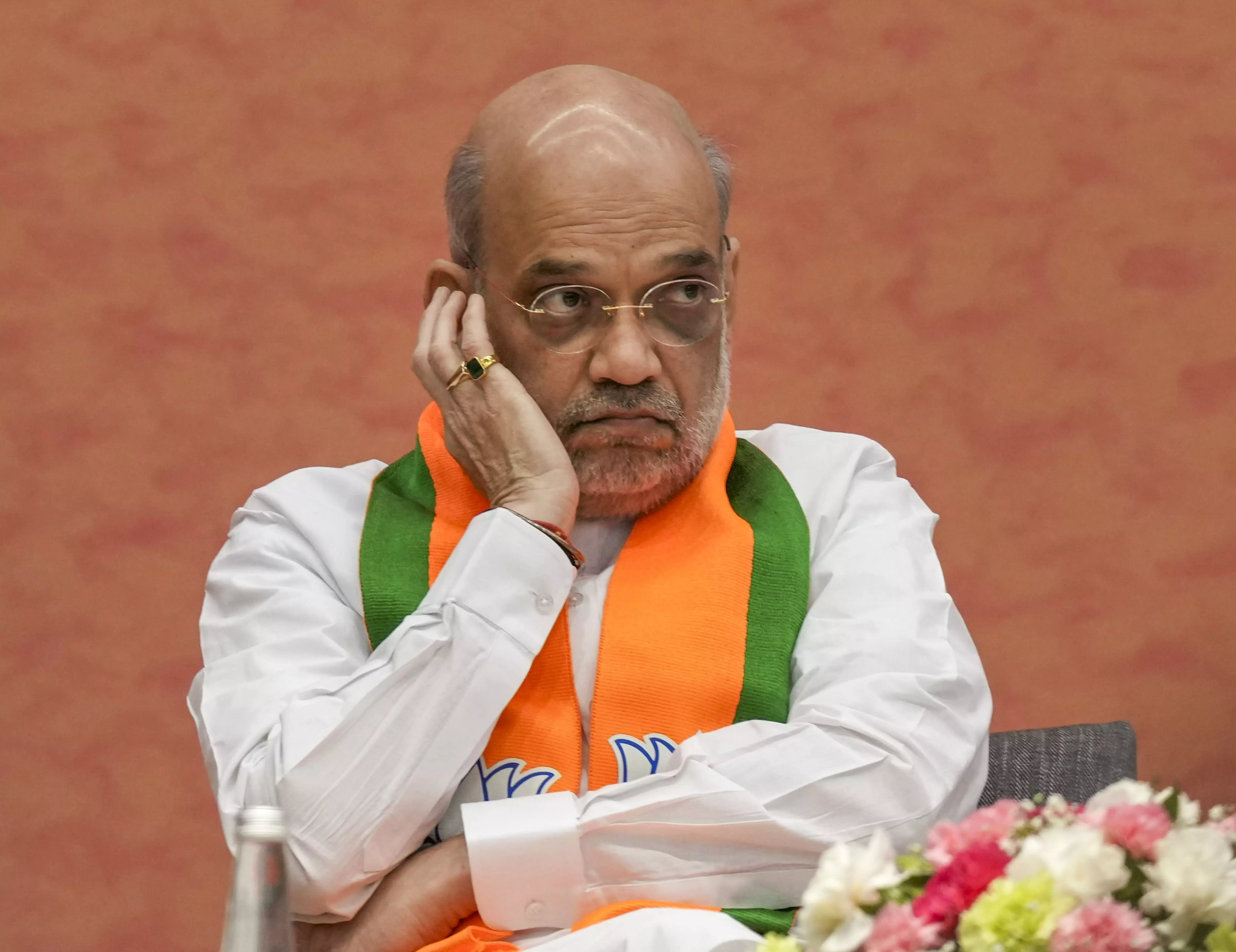
Union Home Minister Amit Shah's appeal to Naxals during the Bastar Olympics marks a significant move towards ending a long-standing insurgency. His call for militants to reintegrate into society with government-backed support highlights the government's commitment to conflict resolution and regional development. This ambitious aim aims to eliminate the Maoist presence by March 2026 and foster a more harmonious national environment.
Bastar Olympics: A Paradigm Shift Towards Conflict Resolution
The Bastar Olympics, a sporting event held in the conflict-ridden Bastar region of Chhattisgarh, has emerged as a game-changer in the government's efforts to combat Naxalism. Union Home Minister Amit Shah's appeal to Naxals during the event symbolizes a profound shift in the government's approach, aiming to end the long-standing insurgency through dialogue and rehabilitation.
Background
The Bastar region has been a hotbed of Maoist activity for decades. The conflict has claimed countless lives and hindered development in the area. In response, the government has launched several initiatives, including the establishment of the Bastar Tiger Force and the implementation of welfare schemes. However, the elusive nature of Maoist operations has made it difficult to achieve a comprehensive resolution.
The Bastar Olympics
The Bastar Olympics, held in April 2023, brought together thousands of tribals and local residents to participate in various sporting events. The event aimed to promote health, fitness, and social cohesion in the region.
Amit Shah's Appeal
During the inauguration, Union Home Minister Amit Shah issued a historic appeal to Naxals, urging them to surrender and reintegrate into society. He assured government support for their rehabilitation and development. Shah emphasized the government's commitment to eliminating the Maoist presence by March 2026 and creating a harmonious national environment.
Significance
Amit Shah's appeal represents a departure from the traditional hard-line approach towards Naxalism. It demonstrates the government's willingness to engage with militants and address their grievances through non-violent means. The Bastar Olympics provided a platform for this dialogue, fostering a sense of trust and community.
FAQs
1. What is Naxalism? Naxalism is an ideology and movement inspired by Maoist revolutionary tactics. It originated in West Bengal in the 1960s and spread to different parts of India, including Bastar.
2. What are the demands of Naxals? Naxals seek the redistribution of land, better wages for laborers, and autonomy for tribal communities. They also oppose government policies and development projects that they believe exploit local resources.
3. Why is the Bastar region a hub of Naxalism? Bastar is home to a large tribal population living in remote and underdeveloped areas. The region has historically faced neglect and discrimination, creating fertile ground for Naxalite recruitment.
4. What is the government's strategy to combat Naxalism? The government employs a multi-pronged approach that includes military operations, development initiatives, and dialogue. The Bastar Olympics represent a shift towards a more conciliatory approach.
5. What is the future of Naxalism in India? While the government remains committed to eliminating Naxalism, the success of its efforts will depend on addressing the root causes of the conflict and providing sustainable solutions for the affected communities. Dialogue and rehabilitation play a crucial role in this process.

Union Home Minister Amit Shah spoke at the inauguration of the 60th DGsP/IGsP conference in Raipur where he stated that Naxalism in India will be fully eliminated before the next conference. He also highlighted the government's efforts in strengthening the security grid and providing permanent solutions to long-standing national security challenges. Shah emphasized the importance of intelligence and collaboration with agencies to tackle drug trafficking and organized crime. He also mentioned the strengthening of India's policing framework, making it amongst the most modern globally.

In a recent Q&A session, Professor Michael Clarke addressed the impact of a leaked call between Donald Trump's envoy and Russia on peace talks. He also discussed Putin's desire for a great legacy, which has led to a lack of pragmatism. According to Clarke, approximately 4,000 main battle tanks and 30,000 pieces of armoured equipment have been destroyed in the conflict, with Russia focusing on building more complex modern tanks. Don't miss out on these insightful answers from the expert.

Following his party's disappointing performance in the recent Bihar Assembly election, politician Prashant Kishor has raised concerns about the voting results, stating that they did not align with the public sentiment he witnessed during his campaign. Despite this setback, Kishor remains determined to build a stronger political organization and continue engaging with the public in preparation for future elections. He also addressed criticisms of his role as an election strategist, reminding critics that one loss does not define his political future.

Indian government under the leadership of Prime Minister Narendra Modi has introduced four new labour codes aimed at protecting the rights and well-being of 40 crore workers across the country. Union Minister Mansukh Mandaviya has hailed the move as transformative and a major step towards ensuring the welfare of the workforce. The new codes bring in much-needed changes such as formalisation and transparency through appointment letters, and universal social security coverage for all workers including gig and platform workers.

In Uttar Pradesh's Lakhimpur Kheri, a police constable is in hot water for allegedly forging a court order to clear his name in an old case, with the intention of securing a promotion. The fabricated document surfaced during an internal investigation, prompting authorities to file a fresh case against the constable. This incident adds to the growing issue of corruption and misuse of power within the police force.

The Supreme Court has directed the formation of a Special Investigation Team (SIT) to conduct a fact-finding inquiry against Vantara, an animal rescue and rehabilitation center in Gujarat, following allegations of non-compliance with laws and acquisition of animals. The SIT, headed by former apex court judge J Chelameswar, will also look into reports of irregularities and complaints from NGOs and wildlife organizations. Vantara has assured full cooperation to the probe and reaffirmed their commitment to animal welfare.

The ongoing family feud within the Rashtriya Janata Dal (RJD) continues to escalate as three more daughters of party patriarch Lalu Prasad Yadav have left the family residence in Bihar's capital Patna. This comes just a day after another daughter, Rohini Acharya, publicly denounced the family and quit politics following the party's poor performance in the recent elections. Amidst allegations of insults and mistreatment, the saga continues to unfold within the Yadav family.

In a special lecture series in Bengaluru, RSS chief Mohan Bhagwat emphasized on the Hindu identity as a responsible and proud son of Bharat Mata. He urged the Hindu society to come together and share the message of 'Vasudhaiva Kutumbakam' with the rest of the world. Bhagwat also recalled the RSS founder and its journey of facing opposition and growth through dedication and sacrifice of its volunteers.

As the West Bengal Assembly elections near, the political battle between Bharatiya Janata Party (BJP) and Trinamool Congress (TMC) has intensified on social media. Following the BJP's victory in Bihar, the party declared its hopes to defeat TMC in Bengal on a popular platform, while TMC leader Kunal Ghosh responded with a proverb highlighting the BJP's potential failure in Bengal. Despite BJP's confidence, TMC remains unfazed and asserts their strong hold in the state.

Congress leader and Leader of Opposition in Lok Sabha, Rahul Gandhi, was criticized by BJP's Shehzad Poonawalla for going on a jungle safari in Madhya Pradesh's Satpura Tiger Reserve instead of focusing on the ongoing Bihar elections. Gandhi had earlier claimed that "vote theft" had taken place in several states, including Madhya Pradesh. BJP's Poonawalla mocked Gandhi's "priorities" and referred to him as the "Leader of Paryatan and partying."