

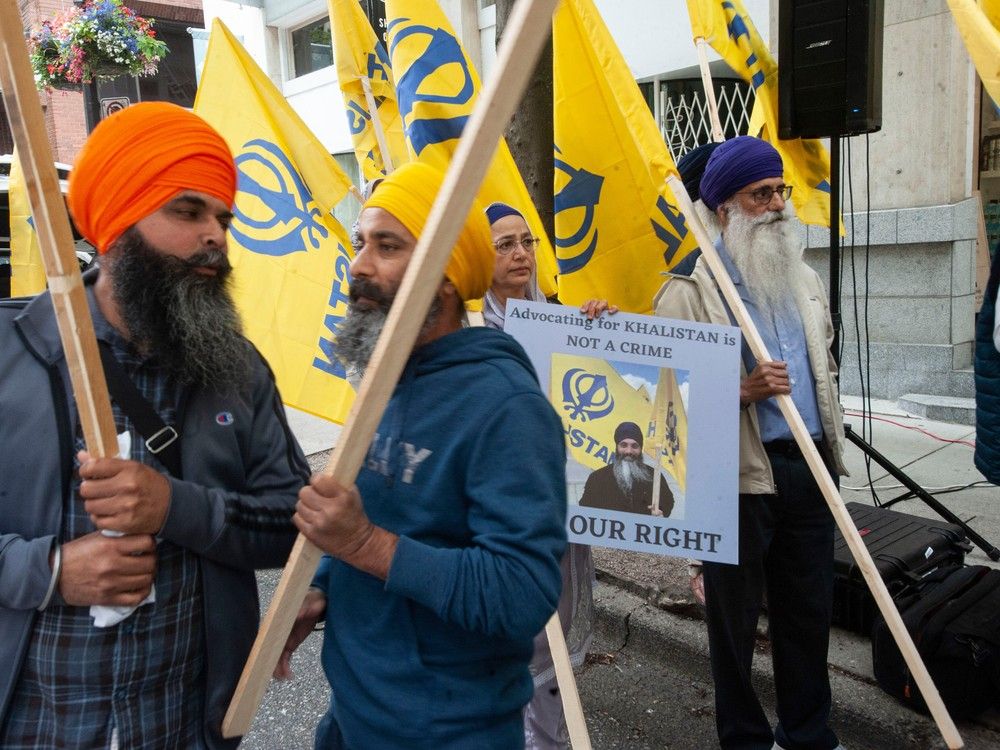
Indian-origin Canadian member of parliament Chandra Arya has raised concern over posters depicting the assassination of former Indian Prime Minister Indira Gandhi by Khalistani supporters in Canada. According to Arya, these posters are an attempt to incite fear among Hindu-Canadians and create a sense of violence. The use of images of guns and the prominence of Indira Gandhi's bindi on her forehead further target the Hindu community. The repeated incidents of pro-Khalistani actions have also led to tensions between India and Canada.
Indira Gandhi Assassination Posters Spark Concerns in Canada
Background
Indira Gandhi, India's third Prime Minister, was assassinated on October 31, 1984, by two of her Sikh bodyguards. The assassination triggered widespread violence against Sikhs in India, resulting in the death of thousands of innocent people.
Current Concerns
In recent weeks, posters depicting the assassination of Indira Gandhi have appeared in various cities across Canada. These posters, allegedly distributed by Khalistani supporters, have raised concerns among Hindu-Canadians.
Khalistani Movement
The Khalistani movement is a separatist movement that seeks an independent Sikh homeland in the Punjab region of India and Pakistan. The movement has become increasingly active in recent years, especially in Canada, where it has a large Sikh population.
Poster Content
The posters in question feature images of guns and the prominent display of Indira Gandhi's bindi, a traditional red dot worn by Hindu women. This imagery is seen as particularly targeting the Hindu community in Canada.
Implications
The posters have sparked tensions within the Indian-Canadian community and between India and Canada. Indian-origin Canadian MP Chandra Arya has raised his concerns about the posters, calling them an attempt to incite fear and create a sense of violence.
Top 5 FAQs
1. Who are the Khalistani supporters distributing the posters?
The identity of the individuals or groups behind the posters is not known. However, they are believed to be affiliated with the Khalistani movement.
2. Why are these posters considered offensive?
The posters are considered offensive because they depict the assassination of a former Prime Minister of India and symbolize the violence that Sikhs faced after her death. The imagery targets the Hindu community and could incite fear and hatred.
3. What action is being taken in response to the posters?
The Canadian government has condemned the posters and is conducting an investigation to determine their origin. Indian authorities have also expressed concern and are urging Canada to take swift action against those responsible.
4. What is the status of the Khalistani movement in Canada?
The Khalistani movement has a presence in Canada, particularly in the Sikh community. However, it is considered a fringe group and does not represent the majority of Sikhs in Canada.
5. What can be done to address tensions between India and Canada?
Both countries need to work together to address tensions and promote understanding. This includes addressing concerns related to the Khalistani movement and ensuring that such hateful propaganda is not tolerated in either country.

Congress MP Rahul Gandhi calls out the government's 'monopoly model' as responsible for IndiGo's crisis of cancelling hundreds of flights. Emphasizing the need for fair competition in all sectors, Gandhi highlights the impact on ordinary Indians who bear the brunt of delays, cancellations, and helplessness. Amid IndiGo seeking relaxation from new regulations, the Civil Aviation Minister has warned the airline to normalize its operations at the earliest.

Melania Trump, the First Lady of the United States, has revealed the Christmas decorations at the White House, focusing on American values of generosity and patriotism. She thanked the volunteers who tirelessly decorated the mansion and emphasized the message of "Home Is Where the Heart Is". The theme of this year's celebrations is a reflection of Trump's busy life as both a mother and a businesswoman. She wants to spread the message of love and grace during this holiday season.

During an exhibit at the World Trade Centre, Maharashtra BJP Minister Mangal Prabhat Lodha praised Chief Minister Devendra Fadnavis, stating that he not only runs the BJP but also controls other political outfits in the state. Shiv Sena MLA Sanjay Gaikwad disputed this claim, stating that their party is solely controlled by Deputy Chief Minister Eknath Shinde. A political observer noted the rising trend of sycophancy and cult personalities in the BJP and their eagerness to demonstrate their closeness to Fadnavis.

Congress MP Shashi Tharoor introduced a Private Member’s Bill to amend the Bharatiya Nyaya Sanhita and remove the marital rape exception, reaffirming that marriage cannot negate a woman's right to grant or deny consent. Tharoor argues that the criminalization of marital rape is an urgent necessity in India's legal system and stresses the importance of upholding constitutional values and adopting a consent standard that leaves no room for ambiguity. He emphasizes that the issue is about violence, not marriage, and asserts that all women deserve the fundamental right to bodily autonomy and dignity.

Maharashtra Chief Minister Devendra Fadnavis emphasized the need for equality beyond traditional social reservations in his interaction with orphaned young people who secured government jobs through the 1 per cent orphan reservation policy. He made this statement at his official residence in Mumbai, Varsha, while discussing the need for inclusivity and equal opportunities for all citizens. Fadnavis stressed that discrimination should not exist in any form and that all individuals should have equal opportunities to succeed.

As Prime Minister Narendra Modi marks the first anniversary of his government, opinions are divided on the performance of the BJP-led NDA government. However, global institutions and investors have shown increasing confidence in the Indian economy over the past year. Despite this, there are still important issues that need to be addressed by the Prime Minister in order to continue the successful trajectory of the country.

Union Home Minister Amit Shah spoke at the inauguration of the 60th DGsP/IGsP conference in Raipur where he stated that Naxalism in India will be fully eliminated before the next conference. He also highlighted the government's efforts in strengthening the security grid and providing permanent solutions to long-standing national security challenges. Shah emphasized the importance of intelligence and collaboration with agencies to tackle drug trafficking and organized crime. He also mentioned the strengthening of India's policing framework, making it amongst the most modern globally.

In a recent Q&A session, Professor Michael Clarke addressed the impact of a leaked call between Donald Trump's envoy and Russia on peace talks. He also discussed Putin's desire for a great legacy, which has led to a lack of pragmatism. According to Clarke, approximately 4,000 main battle tanks and 30,000 pieces of armoured equipment have been destroyed in the conflict, with Russia focusing on building more complex modern tanks. Don't miss out on these insightful answers from the expert.

Following his party's disappointing performance in the recent Bihar Assembly election, politician Prashant Kishor has raised concerns about the voting results, stating that they did not align with the public sentiment he witnessed during his campaign. Despite this setback, Kishor remains determined to build a stronger political organization and continue engaging with the public in preparation for future elections. He also addressed criticisms of his role as an election strategist, reminding critics that one loss does not define his political future.

Indian government under the leadership of Prime Minister Narendra Modi has introduced four new labour codes aimed at protecting the rights and well-being of 40 crore workers across the country. Union Minister Mansukh Mandaviya has hailed the move as transformative and a major step towards ensuring the welfare of the workforce. The new codes bring in much-needed changes such as formalisation and transparency through appointment letters, and universal social security coverage for all workers including gig and platform workers.